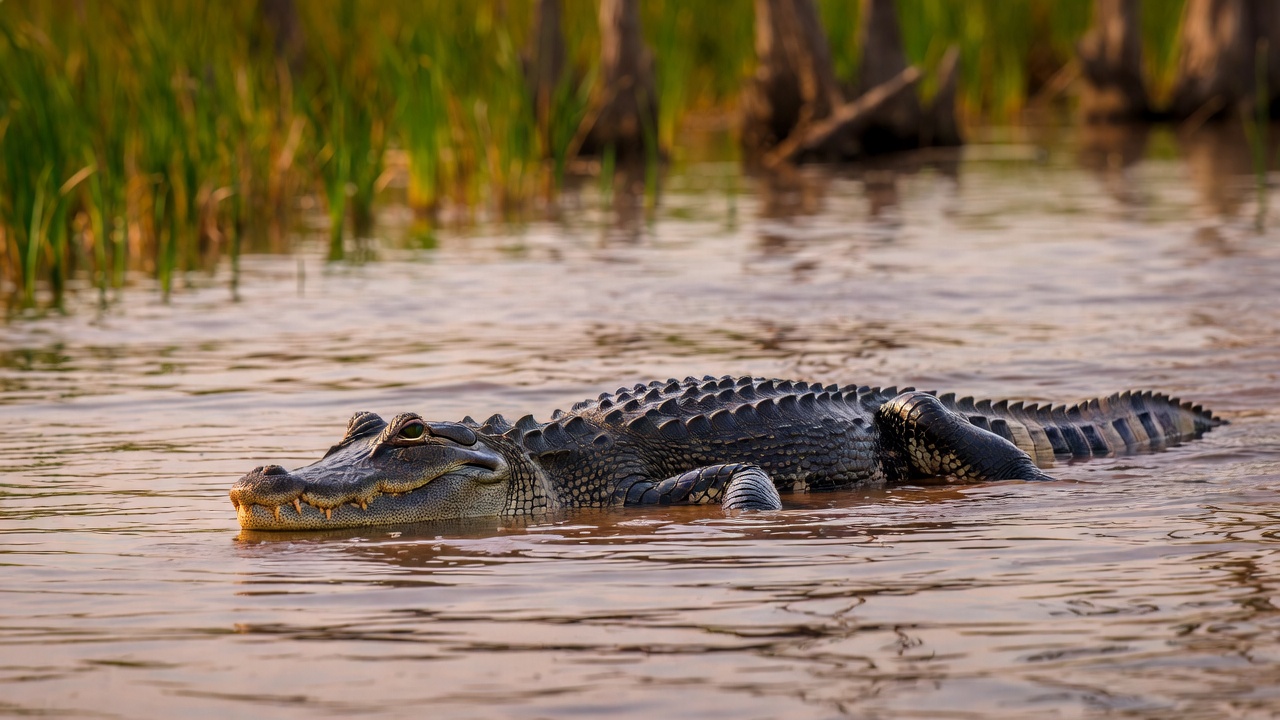
Florida gains approximately 900 new residents every day. That growth comes at a steep cost to the wetlands, springs, rivers, and coastal ecosystems that make the state unique.
Florida's Disappearing Wild Places
~900New residents per day
9.3MAcres of wetlands lost since 1900
2,000+Acres converted per week
23MPopulation (2024) — projected 26M by 2030
Florida once had an estimated 20.3 million acres of wetlands — more than any state except Alaska. Today, roughly half have been drained, filled, or degraded. The remaining wetlands, floodplains, and riparian corridors face relentless pressure from residential development, agriculture, and roadway expansion.
Florida Wetland Loss Since 1900
Original (1900)
20.3M acres
Remaining Today
~11M acres
Lost
9.3M acres
Nearly half of Florida's original wetlands have been drained or degraded
Florida Wildlife Corridor Status
Protected — 10M
Vulnerable — 8M
Conserved (55.6%) At Risk (44.4%)
18 million acres total — 8 million acres remain unprotected and vulnerable to development
Population Growth Pressure
2000
16M
2024
23M
2030 (proj.)
26M
~900 new residents per day — each needing housing, roads, and services built on former habitat
How Habitat Is Lost
Wetland Conversion
Wetlands are Florida's natural kidneys — they filter pollutants, buffer floods, recharge aquifers, and provide critical habitat for fish, wading birds, amphibians, and mammals. Despite federal protections under the Clean Water Act, Florida continues to lose wetlands at a significant rate.
Mitigation banking: Federal law allows developers to destroy wetlands if they "mitigate" by purchasing credits at a wetland mitigation bank. Research consistently shows that created wetlands rarely replicate the ecological function of natural ones.
Isolated wetlands: Following the 2023 Supreme Court ruling in Sackett v. EPA, many geographically isolated wetlands lost Clean Water Act protections, opening them to filling without federal permits.
Agricultural drainage: Historically, hundreds of thousands of acres of wetlands were drained for cattle ranching and sugar production — particularly in the Kissimmee River floodplain and Everglades Agricultural Area.
Shoreline Hardening
When development approaches the water's edge, the natural response is often seawalls, riprap, and bulkheads. These "harden" the shoreline, eliminating the gradual land-water transition that fish, crabs, and shorebirds depend on.
Scale: An estimated 50% of Florida's estuarine shoreline is hardened, with rates increasing dramatically in urban areas
Impact: Eliminates nursery habitat for juvenile fish, removes nesting sites for shorebirds, and accelerates erosion at adjacent natural shorelines
Living shorelines: Florida DEP now promotes "living shoreline" alternatives — using oyster reefs, mangrove plantings, and salt marsh to stabilize shores while maintaining ecological function. DEP Living Shorelines Program
Groundwater Depletion
Florida's freshwater springs, lakes, and wetlands are fed by the Floridan Aquifer — one of the world's most productive aquifer systems. But pumping is outpacing recharge in many areas.
Spring flow decline: Many of Florida's first-magnitude springs have experienced 20–50% flow reductions since the 1960s. Reduced flow means less habitat, warmer water, and more concentrated pollutants.
Lake drawdowns: Central Florida's lakes have dropped dramatically as groundwater withdrawals for agriculture and municipalities lower the water table
Saltwater intrusion: Over-pumping along the coast draws saltwater into the aquifer, contaminating freshwater supplies and ecosystems. Southeast Florida is particularly affected.
Minimum flows: Florida's Water Management Districts set "minimum flows and levels" (MFLs) for springs and rivers — the threshold below which ecological harm occurs. Many waterbodies are already below their MFLs.
Fragmentation & Road Mortality
As Florida develops, continuous wildlife corridors are broken into isolated patches separated by roads, fences, and subdivisions. This fragmentation is devastating for wide-ranging species.
Florida panther: Vehicle collisions are the #1 cause of death for Florida panthers. FWC recorded 32 panther roadkill deaths in 2023 alone.
Wildlife corridors: The Florida Wildlife Corridor — a connected chain of natural lands spanning the length of the state — is a conservation priority. Approximately 18 million acres; about 10 million are already conserved, but 8 million remain unprotected and vulnerable to development.
Aquatic connectivity: Dams, culverts, and water control structures block fish migration routes. The Ocklawaha River dam (Rodman Dam) has been a 50-year controversy, blocking access to critical spring habitat.
What's Being Done
🌿 Florida Forever Program
Florida's primary land acquisition program has protected over 2.5 million acres since 2001. Funded by documentary stamp tax revenue — currently $100M/year, though conservationists argue $300M+ is needed to keep pace with development.
Passed unanimously in 2021, this act directs the state to prioritize land acquisition within the identified Wildlife Corridor. A $400M allocation in 2022 was the largest single investment in the corridor's history.
The Comprehensive Everglades Restoration Plan is a $23.2 billion, multi-decade effort to restore natural water flow to the Everglades. Key projects include the EAA Reservoir, C-44 and C-43 reservoirs, and decompartmentalization.
Once a wetland is paved, a spring run is diverted, or a corridor is severed, it's gone forever. Support land conservation — Florida's wild places are running out of time.
We use essential cookies so the site works. Optional cookies measure how the site is used. Affiliate destinations may set their own cookies if you follow a link. You can accept or decline optional cookies.
Cookie policy